SABIAS QUE?
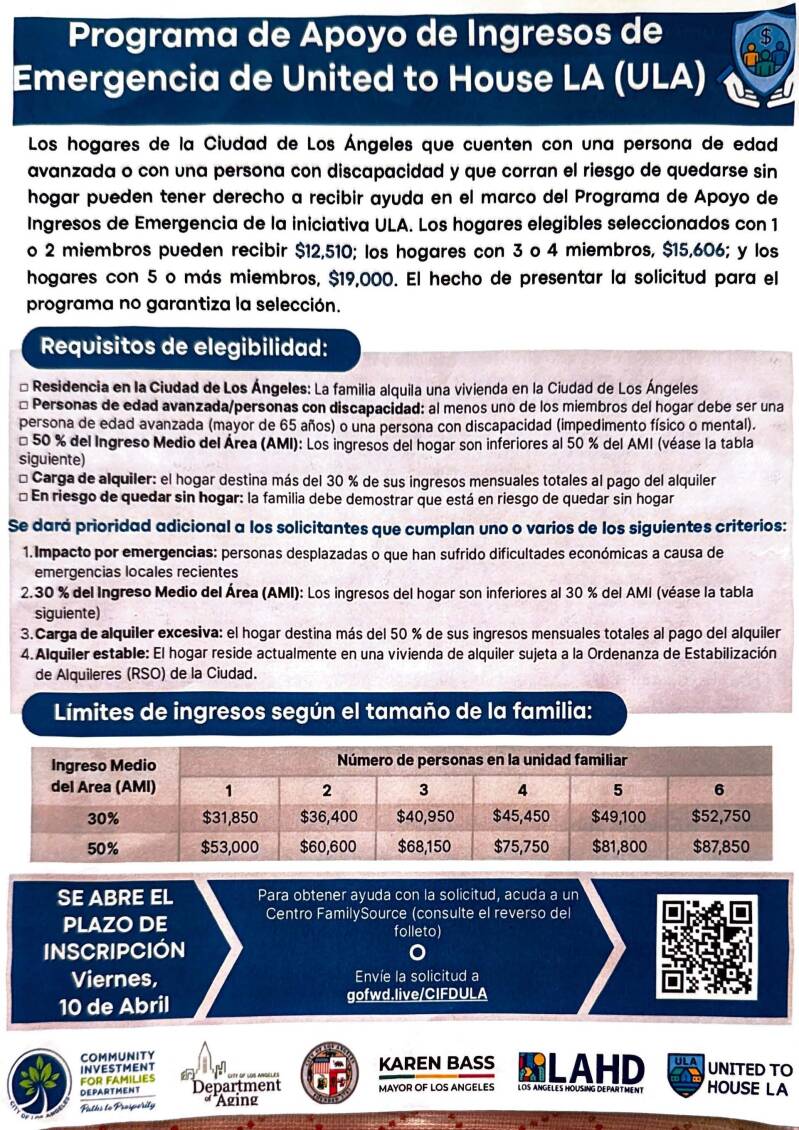
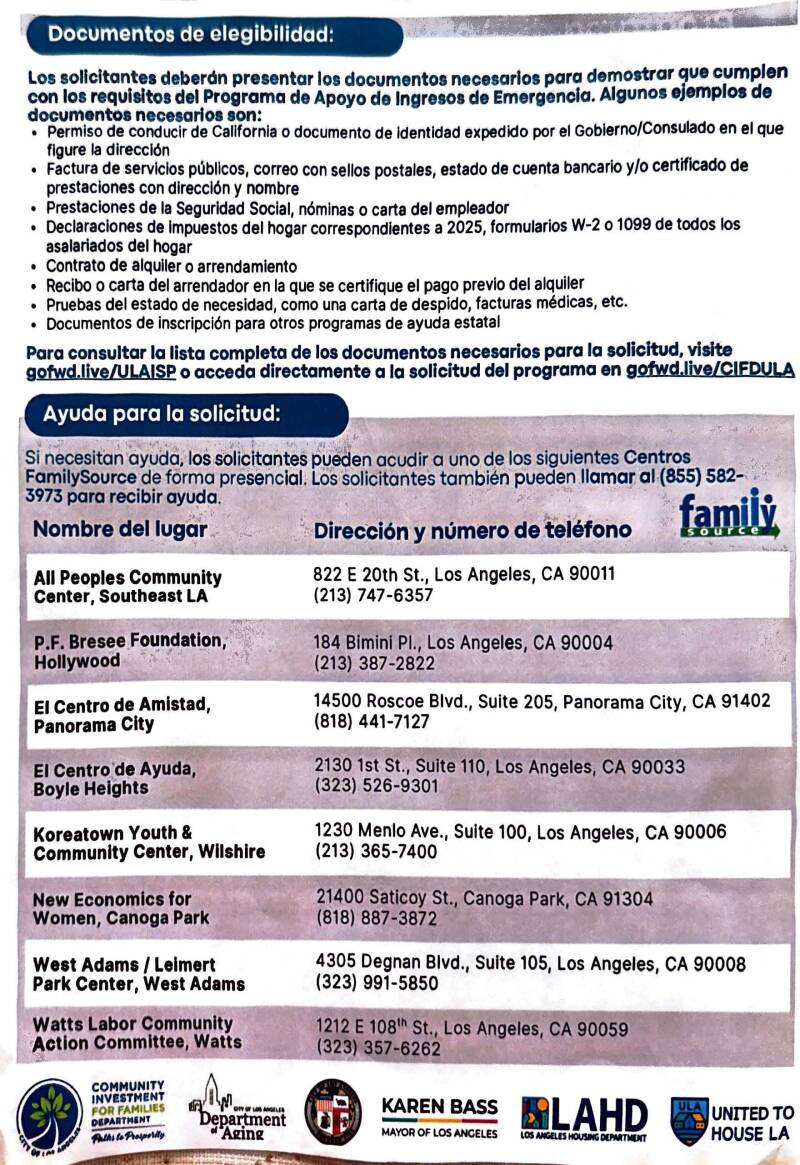
Si usted es un inquilino en la Ciudad de Los Ángeles y tiene 65 años de edad o es discapacitado/ además de cumplir con otros requisitos, puede calificar para el Programa de Apoyo de Ingresos de Emergencia de United to House LA (ULA ) póngase en contacto antes del 30 de abril, 2026 pues es la fecha limite para aplicar. Haga Clic aquí.
https://www.programs-forwardplatform.org/es/ula-emergency-isp

DID YOU KNOW?
If you are a tenant in the City of Los Angeles, are 65 years of age or older, or have a disability—and meet other requirements—you may qualify for the United to House LA (ULA) Emergency Income Support Program. Please contact us before April 30, 2026, as this is the application deadline. Click here.
https://www.programs-forwardplatform.org/es/ula-emergency-isp
SABIAS QUE?
Para confirmar si su edificio está bajo control de alquileres en la Ciudad de Los Ángeles, haga clic aquí: ¿Control de Alquileres? (ZIMAS). Haga clic en "Aceptar" y se abrirá otra pantalla. Anote el número de su edificio y el nombre de la calle (por ejemplo, 339 en la primera casilla a la izquierda de la pantalla y Manhattan Pl a la derecha). Luego, haga clic en "Ir". Se abrirá otra pantalla donde verá que su dirección está completa. Haga clic allí y se abrirá la pantalla. En la parte izquierda de la pantalla, en la sección azul, haga clic en "Vivienda". Busque "Ordenanza de Estabilización de Alquileres (RSO)". Si dice "Sí", entonces su edificio está bajo control de alquileres. Si dice "No", entonces su edificio no está bajo control de alquileres.
NOTA: Si su dirección no aparece en la pantalla después de ingresar el número de su edificio y el nombre de la calle, significa que su edificio no está bajo control de alquileres y pertenece al condado. Haga clic aquí.
Rent Stabilization – Consumer & Business
DID YOU KNOW?
To confirm if your building is under rent control in the City of Los Angeles, click here: Rent Control? (ZIMAS). Click "Accept," and another screen will open. Note your building number and street name (for example, 339 in the first box on the left side of your screen, and Manhattan Pl on the right). Then click "Go." Another screen will open where you'll see your address is complete. Click there, and the screen will open. On the left side of your screen, in the blue section, click on "Housing." Look for "Rent Stabilization Ordinance (RSO)." If it says "Yes," then your building is under rent control. If it says "No," then your building is not under rent control.
NOTE: If your address does not appear on the screen after entering your building number and street name, it means your building is not rent-controlled and belongs to the county. Click here .
Rent Stabilization – Consumer & Business to learn about your rights.
SABIAS QUE?
El Programa de Asistencia de Emergencia para el Alquiler del Condado de Los Ángeles ya está disponible para la Ciudad de Los Ángeles.
Los inquilinos pueden solicitar directamente la segunda ronda de asistencia.
El plazo de solicitud finaliza el 11 de marzo de 2026 a las 16:59 h. Para obtener más información y conocer los requisitos de elegibilidad, haga clic aquí.


DID YOU KNOW?
The Los Angeles County Emergency Rental Assistance Program is now open to the City of Los Angeles.
Tenants can apply directly for the second round of assistance.
The application period closes on March 11, 2026, at 4:59 p.m. For more information and eligibility requirements, click here.

DID YOU KNOW
The Los Angeles County Emergency Rental Assistance Program is now open to the City of Los Angeles.
Tenants can apply directly for the second round of assistance.
The application period closes on March 11, 2026, at 4:59 p.m. For more information and eligibility requirements, click here.
SABIAS QUE?
Ordenanza de Refrigeración del Condado de Los Ángeles
El 12 de agosto de 2025, el Condado de Los Ángeles aprobó una ordenanza que exige a los arrendadores garantizar que los apartamentos mantengan temperaturas iguales o inferiores a 28 °C para el 1 de enero de 2027 en todas las habitaciones habitables.
La ordenanza otorga a los inquilinos el derecho a instalar aire acondicionado u otros sistemas de refrigeración sin impedimentos por parte de los arrendadores ni amenazas de desalojo. Una "habitación habitable" es cualquier habitación que cumpla con los requisitos para dormir, vivir, cocinar o comer, y excluye espacios como armarios, despensas, baños o aseos, cuartos de servicio, pasillos de conexión, lavanderías, áticos sin terminar, vestíbulos, trasteros, sótanos, cuartos de servicio y espacios similares.
*Existe una exención para propietarios de propiedades más pequeñas con 10 unidades o menos, quienes solo deben refrigerar una habitación habitable por unidad a 28 °C antes del 1 de enero de 2027 y todas las habitaciones habitables antes del 1 de enero de 2032.* Haga Click aquí .


DID YOU KNOW?
Los Angeles County Cooling Ordinance On August 12, 2025, Los Angeles County passed an ordinance requiring landlords to ensure that apartments maintain temperatures of 28°C or lower in all habitable rooms by January 1, 2027.
The ordinance grants tenants the right to install air conditioning or other cooling systems without interference from landlords or threats of eviction. A "habitable room" is any room that meets the requirements for sleeping, living, cooking, or eating, and excludes spaces such as closets, pantries, bathrooms or toilets, utility rooms, connecting hallways, laundry rooms, unfinished attics, foyers, storage rooms, basements, utility closets, and similar spaces.
*There is an exemption for owners of smaller properties with 10 units or fewer, who only need to cool one habitable room per unit to 28°C by January 1, 2027, and all habitable rooms by January 1, 2032.* Click here.
SABÍAS QUE?
El Proyecto de Ley 628 de la Asamblea de California (AB 628), vigente desde el 1 de enero de 2026, exige a los arrendadores proporcionar y mantener estufas y refrigeradores en funcionamiento en todas las unidades de alquiler.
Este requisito se aplica a todos los contratos de arrendamiento nuevos, modificados o renovados. Si se descubre que una unidad de alquiler no tiene estufa o refrigerador, o si alguno de los electrodomésticos no funciona o presenta defectos, un inspector de vivienda del Departamento de Vivienda y Desarrollo Urbano de Los Ángeles (LAHD) emitirá un Aviso de Cumplimiento. Los arrendadores tendrán al menos 30 días para resolver el problema identificado. El incumplimiento del Aviso de Cumplimiento por parte de un arrendador puede resultar en una Audiencia Administrativa, una multa y/o otras sanciones permitidas por la ley. Haga clic aquí


DID YOU KNOW
California Assembly Bill 628 (AB 628), effective January 1, 2026, requires landlords to provide and maintain working stoves and refrigerators in all rental units.
This requirement applies to all new, modified, or renewed leases. If a rental unit is found to lack a stove or refrigerator, or if any of the appliances are not working or are defective, a Los Angeles Department of Housing and Urban Development (LAHD) housing inspector will issue a Notice of Compliance. Landlords will have at least 30 days to resolve the identified problem. Failure to comply with the Notice of Compliance may result in an Administrative Hearing, a fine, and/or other penalties permitted by law.Click here

En CELA, creemos que la información clara y accesible es clave para el empoderamiento. Esta página es parte de nuestro esfuerzo continuo para proporcionar recursos educativos que beneficien a nuestra comunidad en Los Angeles.
At CELA, we believe that clear and accessible information is key to empowerment. This page is part of our ongoing effort to provide educational resources that benefit our Los Angeles community.
Si tiene más preguntas relacionado con la vivienda, no dude en ponerse en contacto con nosotros. En CELA, estamos aquí para ayudarle.
If you have any further questions about housing-related issue, please don't hesitate to contact us. At CELA, we're here to help.
